
Tottenham Hotspurs vs London City Lionesses
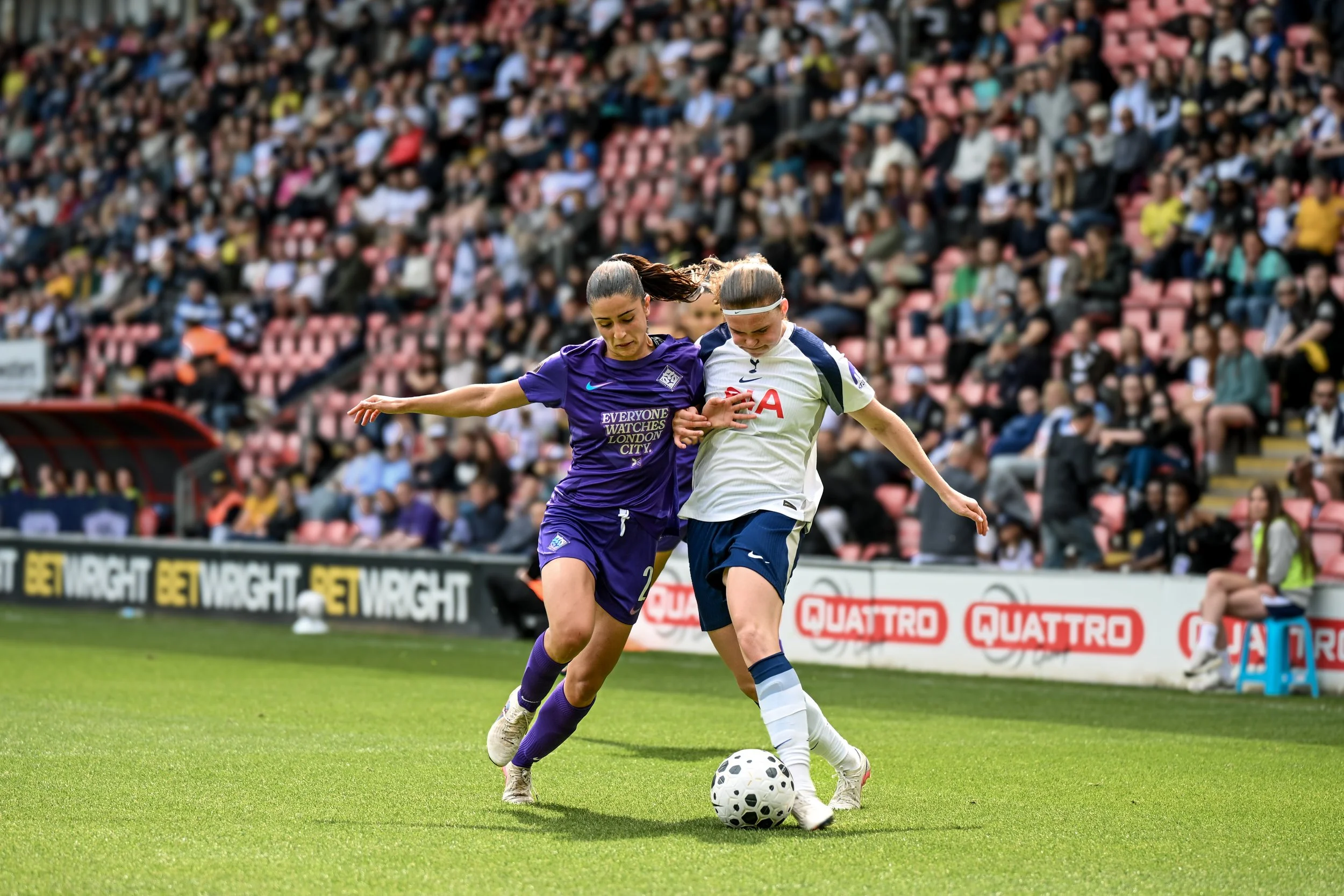
Photo Credit: Louise Anderbjörk
With summer approaching, the football season is slowly drawing to a close, and on the 3rd of May I was invited to cover Tottenham Hotspurs Women’s penultimate game in the Barclays Women’s Super League 2026. Playing at their home ground at Brisbane Road in East London, Spurs Women were up against London City Lionesses and eager for revenge following their previous November match, which ended in a 2–4 defeat for Tottenham.
This Sunday, the game was scheduled for a 12 noon kick off, so as usual I arrived just over an hour before to have plenty of time to collect my press pass, have a quick coffee in the media room, and get my gear set up pitchside. It is always beneficial to have extra time to get used to the specific stadium conditions before the game starts, but especially in the summer when it can take time to find the right balance in lighting settings. Direct sunlight, shadows from clouds and stands, and strong colours around the pitch can all make things quite tricky. In this regard, it is also helpful to be covering ‘the game’ rather than shooting for a specific team, as that allows you to position yourself on the goal side with the least shadows and stay there for the full match without needing to move.
Soon after the game started, Tottenham secured an early advantage with a goal from Signe Gaupset, and shortly after Olivia Holdt followed to place Spurs in a comfortable 2–0 lead going into half time. These goals made for some great action shots, but I had also set myself the challenge of focusing on more candid player profiles to broaden my coverage and make my portfolio more diverse. It is something I would recommend to anyone starting out, as it helps avoid ending up with a set of images that all look too similar. As half time came along, it was also a good chance to chat to the other photographers, talk through the game, share advice, and connect. What stood out to me in particular was how many young female photographers were there compared to many of the men’s games I have worked on. It was great to meet and be inspired by so many talented people, and to even be able to make some new friends in the industry too.
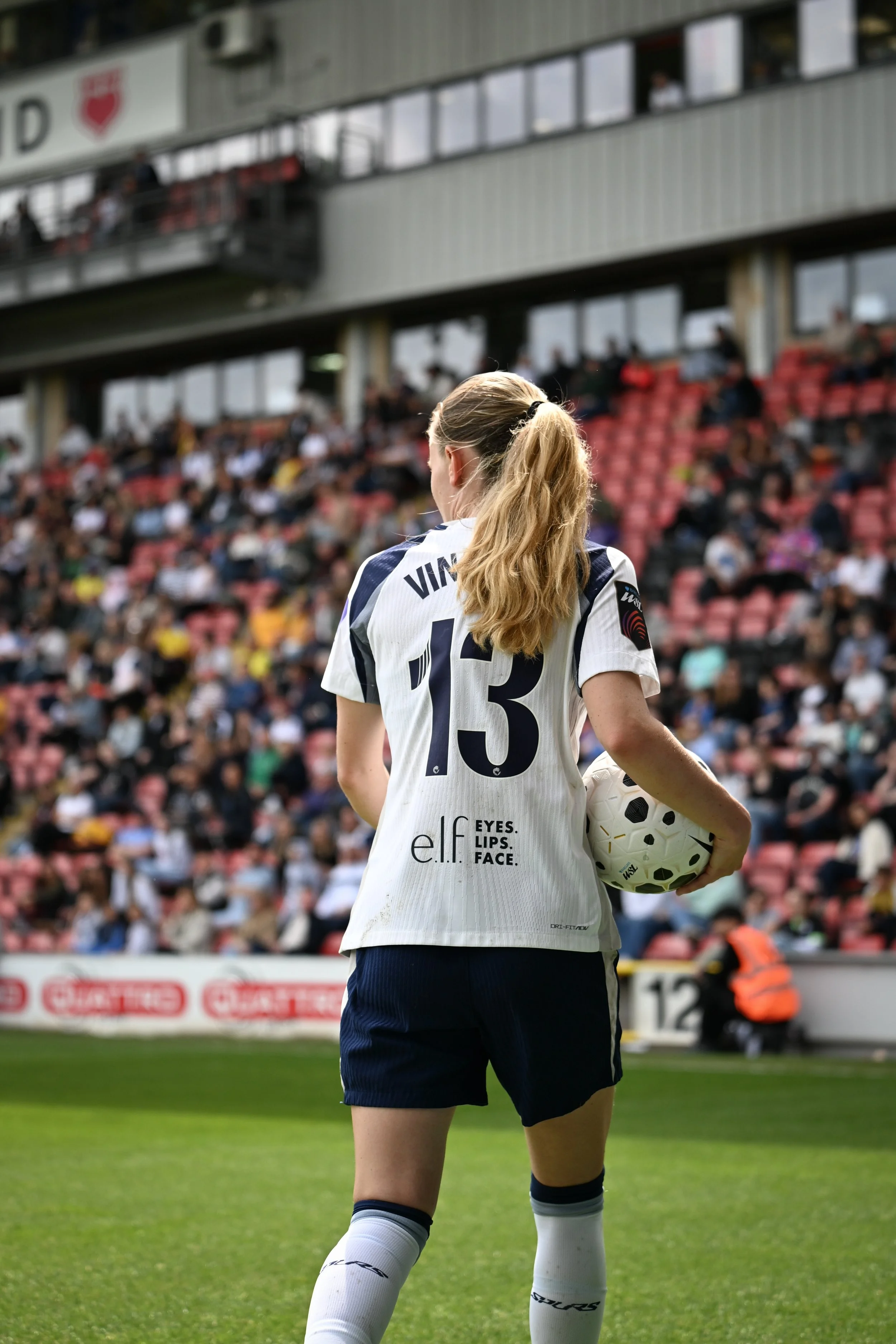
Photo Credit: Louise Anderbjörk
As we moved into the second half, the earlier forecast of thunderstorms had completely cleared into a bright blue sky. Not only did this serve as a reminder to always come prepared for all weather conditions, but it also created a new lighting setup compared to the first half. It showed again how important it is to know your camera and feel confident adjusting your settings quickly as conditions change. Towards the end of the match, London City Lionesses pulled one back through Alanna Kennedy, adding some tension, but when the final whistle blew it wasn’t enough and Tottenham secured a 2–1 win. The result also meant that Tottenham reached 33 points for the season, their highest total in the Women’s Super League so far, placing them fifth in the table, while London City Lionesses remained seventh.
The atmosphere at full time was fantastic, especially as this marked the final home game for several Tottenham players whose contracts are coming to an end this summer, including captain Bethany England. Many fans had brought handmade signs, scarves, and shirts to show their support, which created a strong sense of connection between the players and the crowd. As a photographer, it is important to remember that these moments are just as important as the action on the pitch. Some of the most powerful images come from simply turning around and capturing the reactions of the crowd when a goal is scored, a chance is missed, or a match is won. These moments help tell the full story of the game and add something unique to your work and overall portfolio.
When I got home, it was time to sit down and begin the process of culling and editing, narrowing over a thousand images down to a small selection for portfolio and social media. Just as finding the right settings on the pitch can be a challenge, editing in these conditions can be equally difficult. The strong sunlight and the green reflection from the pitch can make white balance and colour difficult to manage. Sadly, there is no quick fix, but one thing I have learned is not to fight the conditions too much. Trying to force every image into the same look can lead to over editing and a loss of quality. Instead, leaning into the natural light and colour of the day can often produce more authentic results, and sometimes even lead you towards a style you might not have explored otherwise.
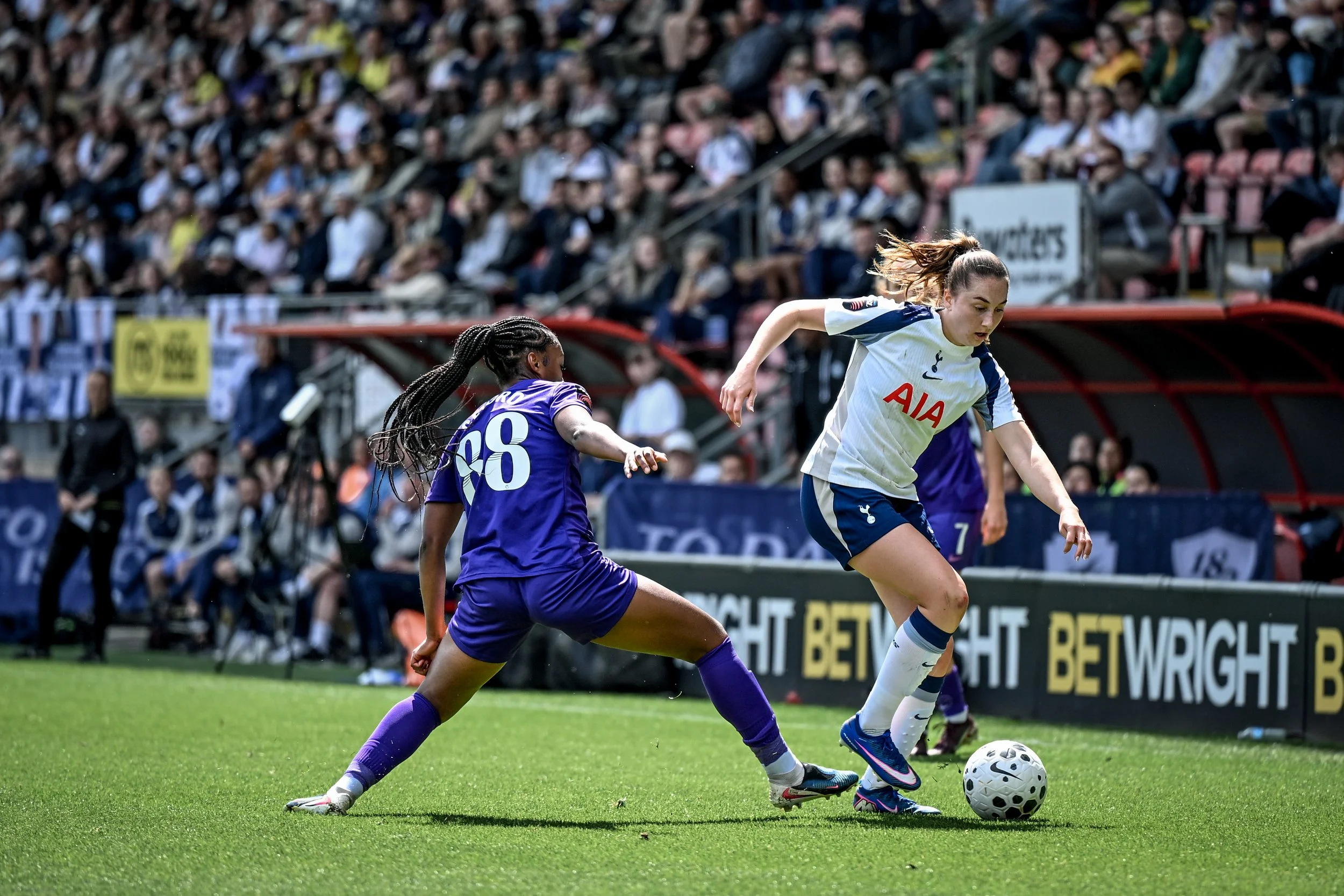
Photo Credit: Louise Anderbjörk